
In cave terms, virtually no time has passed since ancient Riverbluff Cave was discovered on the southern outskirts of Springfield on Sept. 11, 2001. From a human perspective, however, that quarter-century has changed a lot.
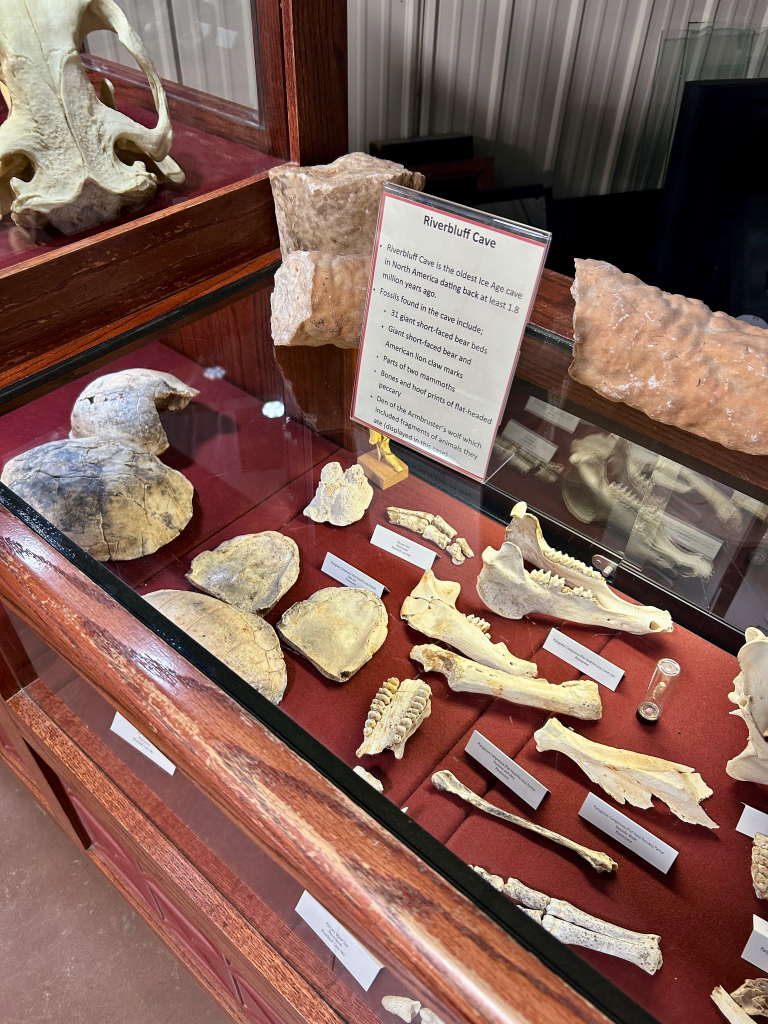
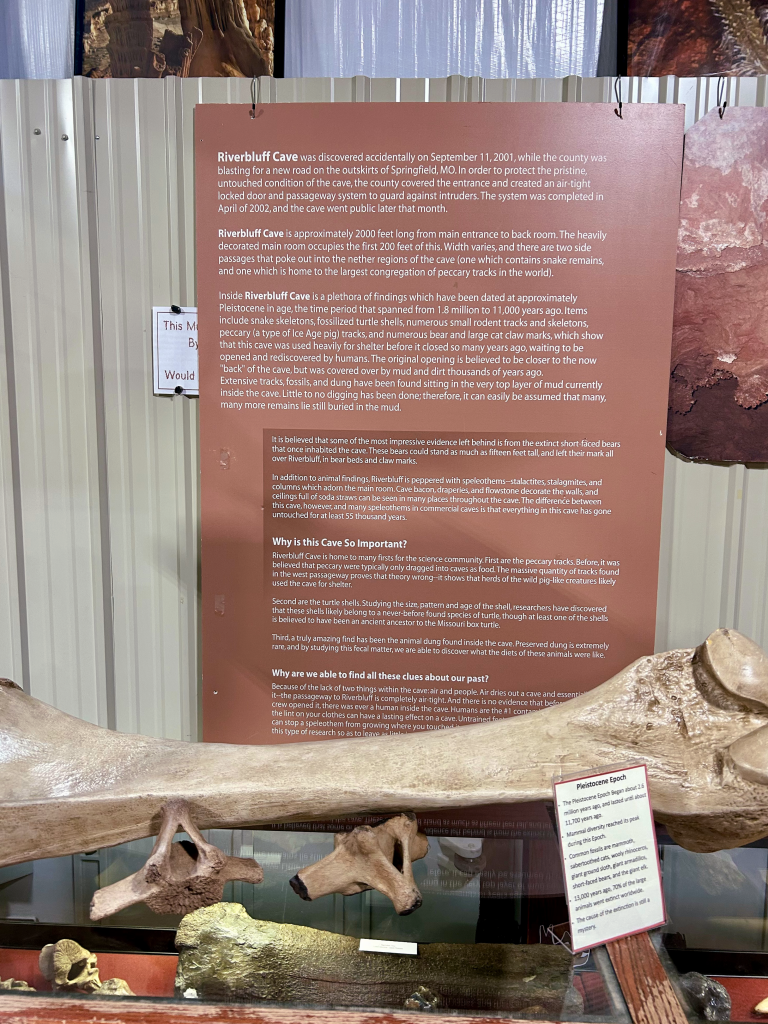
Discovering that cave – found during blasting for road construction that was paused by news of the terror attacks on that fateful day – revealed what today is known to be the oldest Ice Age fossil cave in North America.
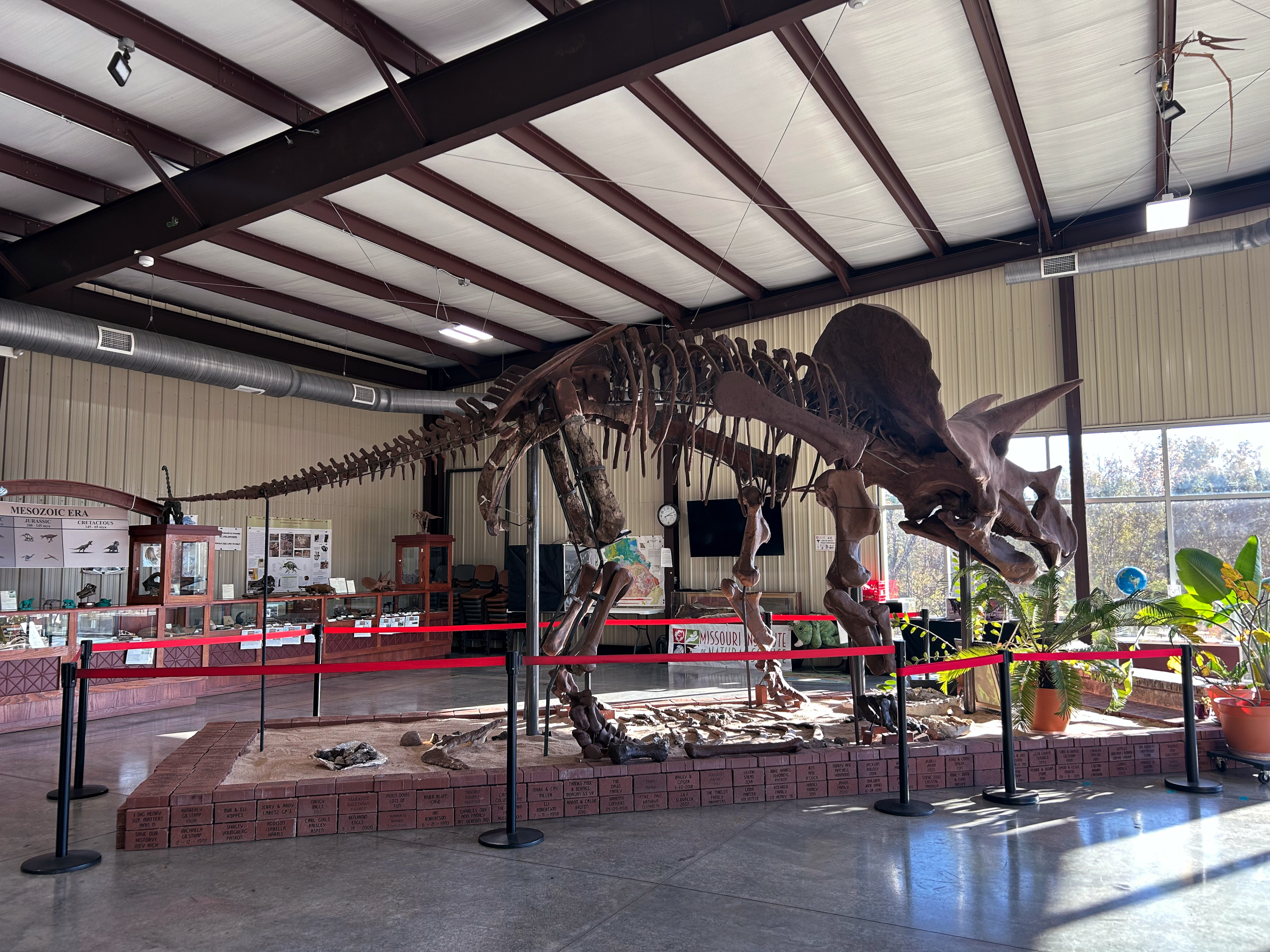
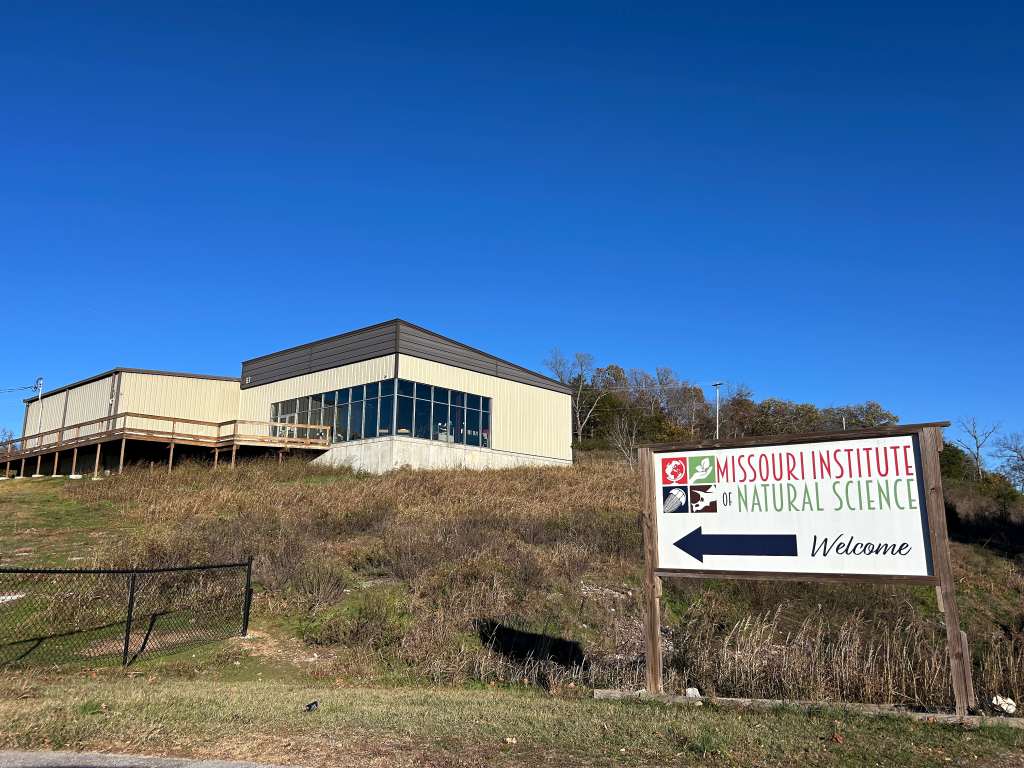
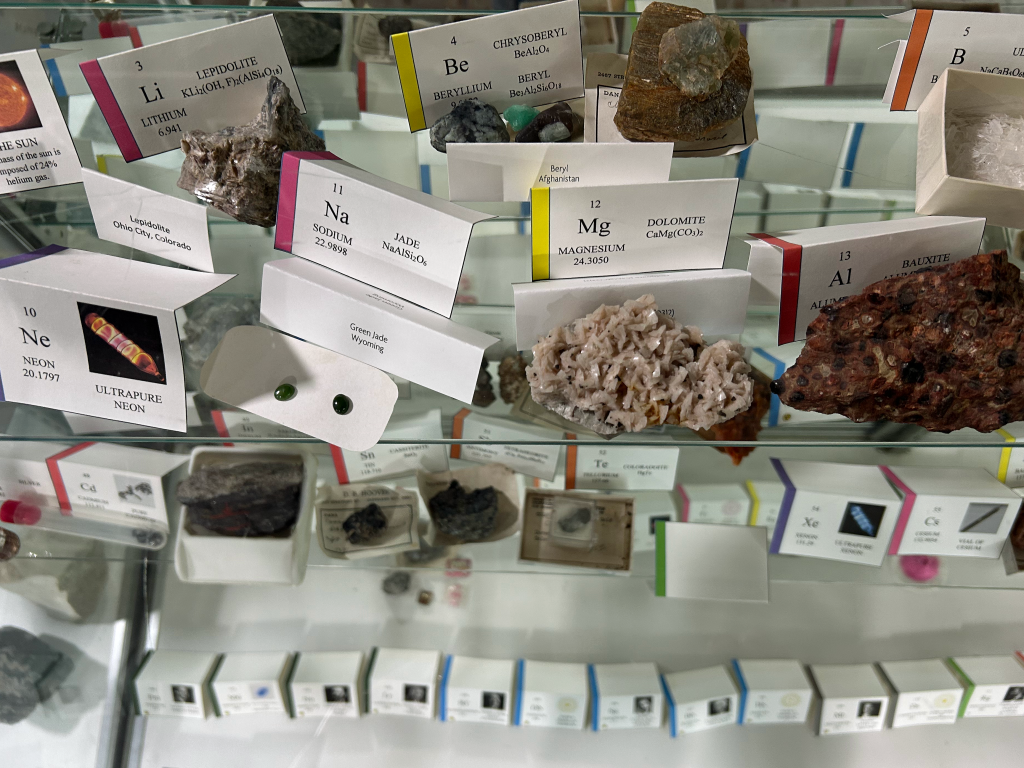
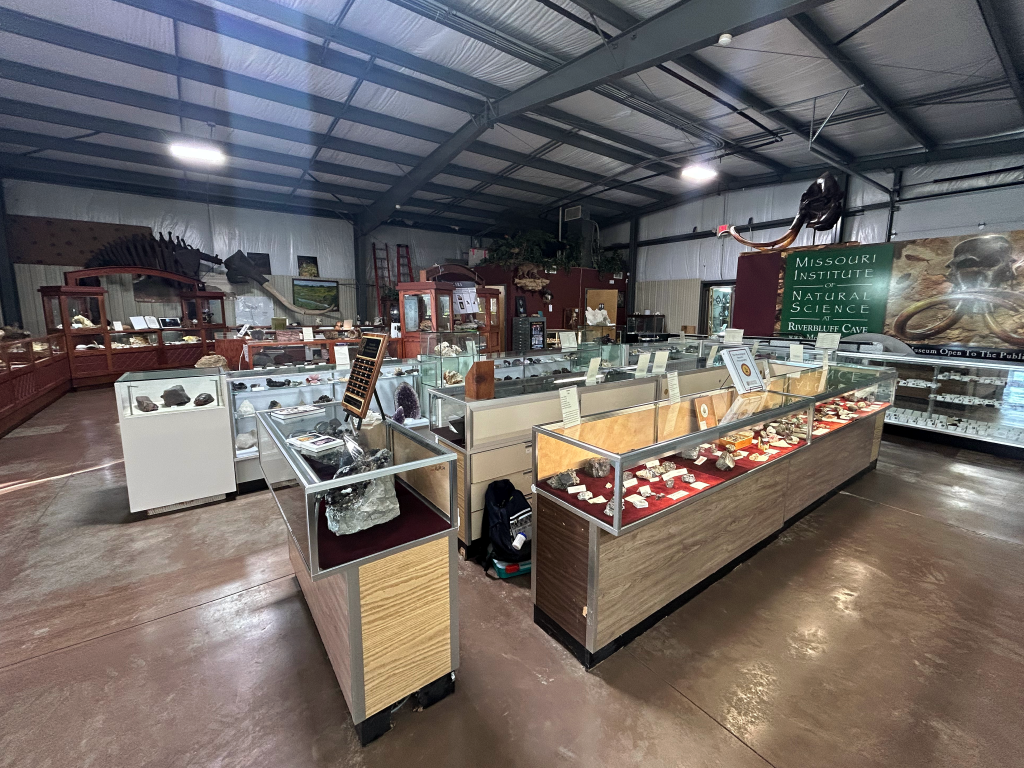
Its discovery also led to another notable Ozarks landmark: The Missouri Institute of Natural Science, the state’s first museum of its kind. Featuring fossils, minerals and even a triceratops, it’s free to visit and open to the public six days a week.
Finding the cave
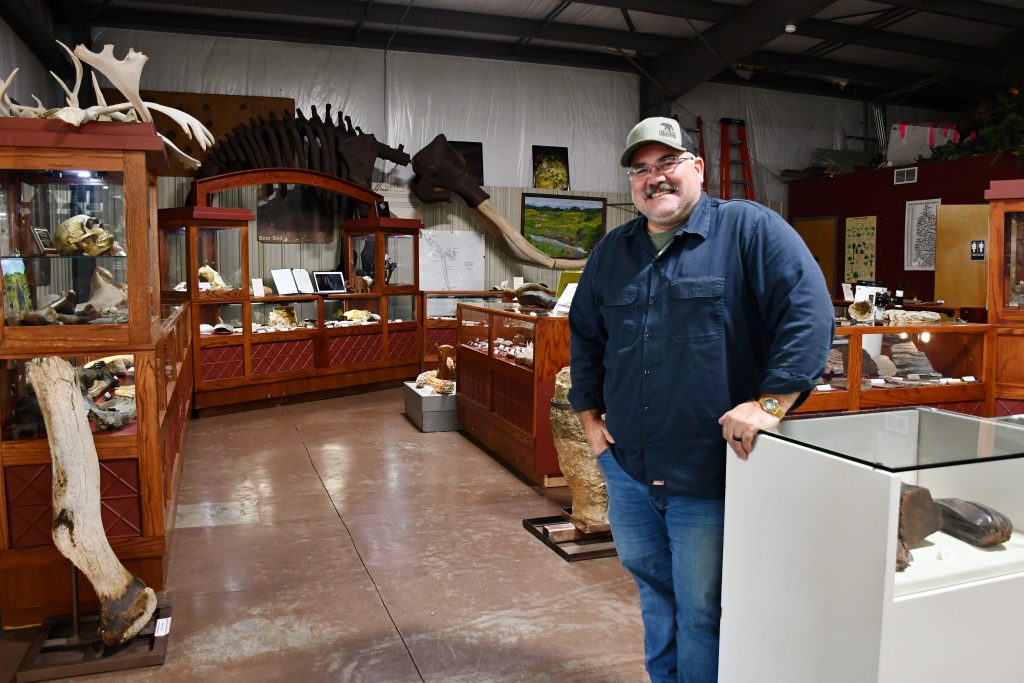
A key link in this story is Matt Forir, a man who has spent half his life connected with the cave, even more dedicated to the idea of a Missouri museum, and most of his 52 years interested in fossils.
Today, he’s Greene County’s geologist and president of the museum’s board. But in 2001, he was a young college student when he was asked by Dr. Ken Thomson, a geology leader at what was then Southwest Missouri State University, to visit a cave found while building a road.
Even though the crew was told to cease all blasting due to 9/11, several holes had already been loaded with explosives. They received special permission to detonate those specific ones, which revealed the cave.
“We always get called out to the new caves,” Forir said. “And so he (Thomson) called me and said, ‘Hey, the highway department just found a new cave. You got time today to go out and check it out?’
“It’s easy to sit back now and like, ‘Oh, this is such an important discovery,’” he said. “But on that day, it was just another cave.”
At least until he crawled inside. It didn’t take long for him to know this wasn’t what he expected to find.
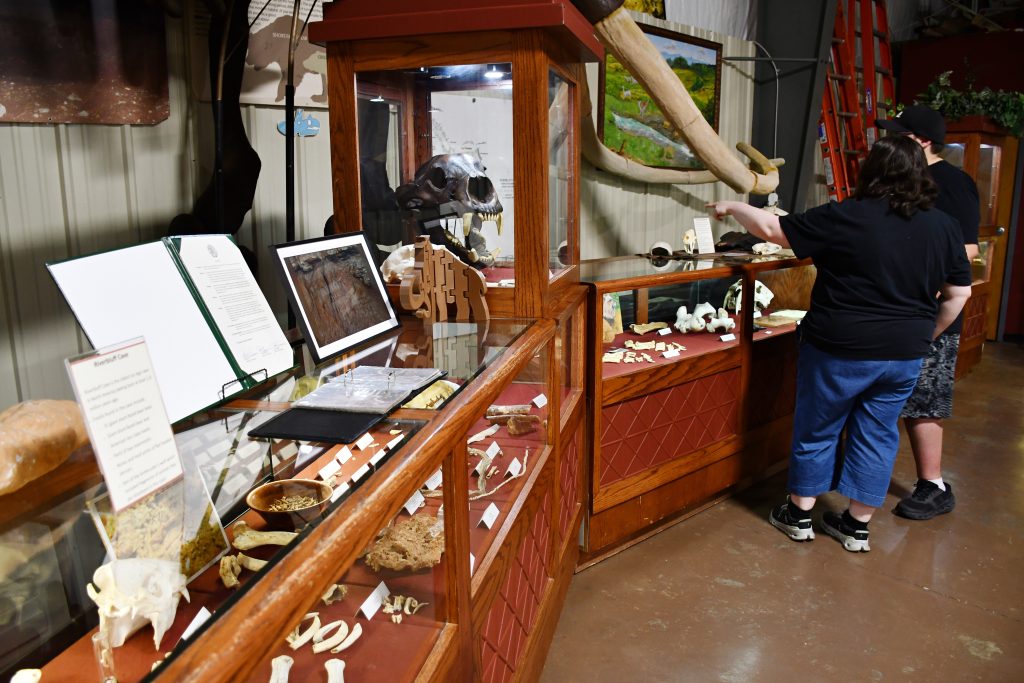
“When I got in, I could recognize the fossil aspect pretty quick,” Forir said, who visited with fellow cave enthusiast Lisa McCann. “I mean, it didn’t take long. We were in there about 20 minutes when I started to see the claw marks and stuff like that and realize this has potential to be something big.
“There weren’t any human footprints ahead of us. We were it. I mean, this is like walking on the moon.”
Coming out and reporting what was found led to another question: How to protect the cave, which was in an area set for development.
“You see a lot of times where construction companies would open the cave, and then it was always the wrong outcome,” Forir said. “It’d get blasted shut, concreted shut, sealed up forever. We had seen enough stuff in there that I didn’t want to lose this (cave). There was a selfish, a self-indulgent part of it, from the ‘scientist explorer’ aspect, that I really wanted to spend more time with this cave.”
Forir recalled that a key part of this story was a meeting, held a couple of days after the cave was uncovered, with Greene County officials, the construction company, and he and Thomson.
“I knew my place, and I’m sitting in the corner, just kind of watching the show happen, and I just see all this kind of hem-hawing around,” he said, given the competing interests. “Finally, I just did something I would normally never do. I just stood up and said, ‘Hey, I’ve got an idea.’”
He says he suggested that research in the cave be put on hold until after construction of the road was complete – but that the scientists were involved so it was done in a way that protected future exploration.
“Everyone’s like, ‘Hey, that’s a novel idea,’ he recalled. “It was a good, good moment.
“We figured out how to work that out. To this day, I’m still proud of the fact that the road was put in months ahead of schedule and under budget, and we got to do science, and everyone was happy.”
Another key in this conversation was Dave Coonrod, who was Greene County’s presiding commissioner and also had a geology background.
“I think our actions here show we know how to do this,” Coonrod said of their proactive actions to preserve the cave back then.
“I think people are just genuinely excited about a discovery of this magnitude that has been found in Greene County,” he continued. “Most people think of caves as just holes in the ground.”
Coonrod’s comments were included in an April 2002 Springfield News-Leader article about the cave. Another published that same month included remarks from the late Tom Aley, a well-known hydrologist and cave expert, along with Thomson and Forir.
“Along with moving the roadway 27 feet, efforts to protect the cave cost $50,000, Greene County road and bridge administrator Kevin Lowe said,” noted the News-Leader article. “Spending the money was worth it, and the county and construction workers deserve credit for preserving the cave, Thomson and Aley said.
“To be able to catch it early enough and go steady and study it makes a big difference,” Thomson also said back then. While Thomson was key in the cave’s early days, he tragically didn’t get to see much of its work to fruition. He and his wife, Edda May, were killed in a car accident in 2004.
Bringing the museum to light
It wasn’t long after discovering Riverbluff Cave that Forir realized it might hold the keys to another dream: a natural science museum in Missouri.
The state didn’t have such a facility at that point, and he had tried to make it happen in other places, like Kansas City and St. Louis. Nothing worked. Even an attempt in Springfield didn’t go anywhere aside from rejections in bank offices – until Riverbluff Cave was discovered.
“You know, it was ‘keep going, keep going,’” Forir said. “Because they didn’t know the museum business. I did. They didn’t see the need for it. I saw that need.
“We did this for a year and a half or so, maybe two years, of this trying to get the museum going and just kept hearing ‘no, no, no.’ But when the cave opened up, I knew this was it – and boy, did I! I mean, I underestimated the importance of the cave at the time.
“It made me, overnight – I won’t say famous, but people knew who I was,” he said. “I mean, I couldn’t go to Walmart anymore and buy fish sticks and pants without someone going, ‘Hey, you gonna wear them pants in the cave?’
“I knew at that point I was getting some pull in the community, and so I started saying, ‘Hey, people like the cave, people are really interested in the cave.’ So I changed my approach and said, ‘If you want to keep the stuff we’re finding in the cave … here, we have to build a museum.’ Otherwise, it’s going to go somewhere else to another museum that’s already established.”
This time, the message was heard. In addition to keeping items local, the new museum allowed the public to connect with the cave, which has never been open for most to see.
“The cave is the catalyst that got the museum started – 100 percent,” Forir said.
The museum’s first iteration opened in 2009. Today, in addition to seeing the displays, visitors to the museum are also welcome to hike through trails on the property and hunt for fossils (but rock hammers, picks, or chisels aren’t allowed). “Exposed boulders provide some great examples of the types of fossils the Ozarks has to offer,” the institute’s website notes. “Visitors to the institute are encouraged to hike up the hill and hunt for fossils of their own to take home with them.”
Additionally, another touchpoint is in the works: A book that will showcase images from Riverbluff Cave.
Looking forward at the past
This work hasn’t been easy, and it’s evolved in ways a young Forir never expected when he entered Riverbluff Cave for the first time 25 years ago.
“There’s things that we talk about. There’s things we’d like to talk about. There’s things we’ll never speak about ever again,” he says.
For one, the physical conditions of this particular cave have been challenging, Forir said. Another bigger issue has been sharing ancient artifacts in a place where evolution is looked on by some as false teaching.
“It’s been difficult,” he said. “As a scientist in charge of this project since Day One, I’ve had to weave in and out of politics and egos, and there’s always that battle when you’re building a (natural science) museum in a town that has more churches than liquor stores.”
Other factors, too, have brought bittersweet realities – such as museum expansion made possible by funds left after friends have passed away.
Those moments and many more leave marks. Perhaps not as visible as what’s found in the cave, but still part of the story. Chapters, too, have been written beyond the Ozarks – for example, when representatives from the MINS were involved in a dig in Wyoming that resulted in the discovery of Henry, a triceratops now on display at the institute.
And those stories, particularly regarding Riverbluff Cave, will never be finished in Forir’s lifetime.
“Ultimately, I don’t want to go under and excavate the whole cave,” he said. “My job as a caretaker right now is to go in there and do some science, do some work, and keep doing that a little bit here and there.
“But the guy who takes my place, he gets to do his part in there, and the person who takes his place gets to do their part. So we’ll each excavate five or 10 percent. Projects this big — I mean, they last decades in many cases, and probably the cave will never be fully excavated or fully described, and that’s just the way these things go.”
But one of the most impactful moments for him isn’t looking back – it’s looking forward through all the kids who have come through the museum’s doors. Sometimes that’s on field trips or for birthday parties; in other cases, it’s as interns. That educational aspect is deeply personal for Forir, who grew up in stressful economic realities and believed education was important to his future.
“It’s neat to see these guys come back with PhDs in paleontology, or be mine engineers or just geologists,” Forir said. “They’re out there doing their thing, and it’s fun to watch the fact that they got their start here. So the cave has not only generated papers and what have you, books and so on. It’s creating the next generation of scientists because of what the museum and the cave do – it’s a force multiplier.
“We’re at that point in our trajectory as a museum where, every day, we have those new kids that come in, and we have the potential to influence their lives in a positive way.”
Want to visit?
More information about the Missouri Institute of Natural Science is available here. While it’s free to visit, the museum does accept donations and welcomes volunteers.