

Since her famed “Little House” books were published nearly a century ago, the stories of pioneer life have brought new-yet-old worlds to readers whose own memories are linked by their pages.
Wilder’s influence was so great that the State Historical Society of Missouri calls her “one of the most influential children’s authors in American history.”
And that began in the Ozarks where Wilder and her husband, Almanzo, and daughter, Rose, moved in 1894.
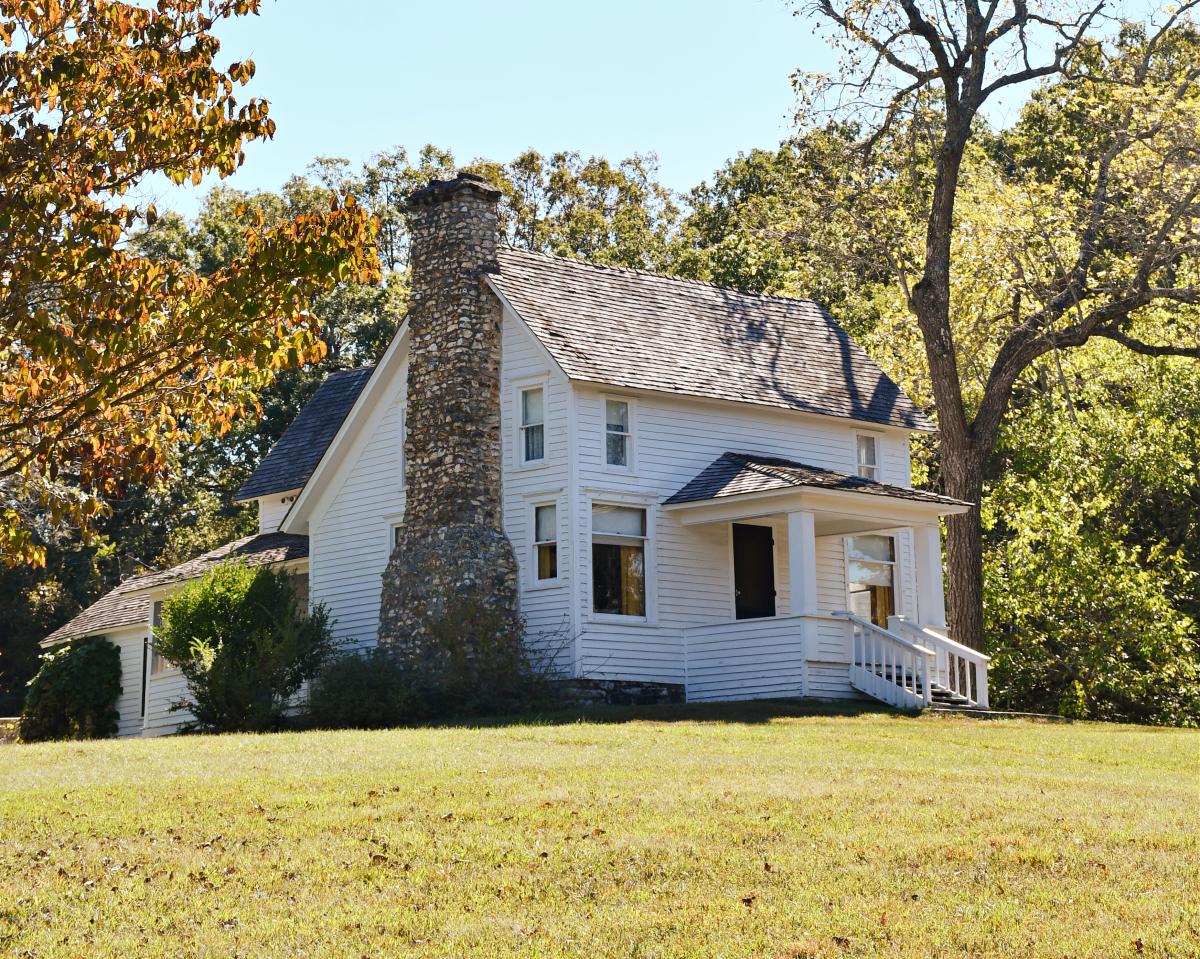
It was at the Wilder farm on the outskirts of Mansfield, Missouri, where the “Little House” books were penned. According to the Laura Ingalls Wilder Historic Home & Museum, more than 30,000 visitors from all 50 U.S. states and about 20 countries visit the houses – yes, there were two of them – every year.
“In a world that moves so fast and often feels divided, her writing pulls us back to the basics — hard work, honest living, and gratitude,” says Nicholas Inman, director of the Laura Ingalls Wilder Home & Museum near Mansfield. “She showed that ordinary people can live extraordinary lives just by the way they handle life’s challenges.”
How did Laura Ingalls Wilder arrive in the Ozarks?

Fans of the “Little House” books know that Wilder’s life took her many places. She was born on a farm near Pepin, Wisconsin, in 1867, the second of Charles and Caroline Ingalls’s five children. The Ingalls family moved regularly as they sought a better life, taking them to Kansas, Minnesota, Iowa and South Dakota.
After Laura and Almanzo married, they too moved – even as far as Florida – before ultimately settling in Missouri. That arrival followed a string a devastating moments in the Wilders’ lives, as documented in a 1943 newspaper article:
“In 1891, the young couple had nearly died of diphtheria; their son did die; their house burned down, and Almanzo was left partially paralyzed. During his convalescence Laura worked twelve hours a day in a dressmakers’ shop for $1 in wages. The $100 she accumulated bought their new land in Missouri, which they named Rocky Ridge farm.”
They were drawn to the Ozarks by the allure of the “Land of the Big Red Apple” during the region’s heyday in apple and commercial fruit exports. And it was there, on that farm near Mansfield, where Wilder began writing.
She was a newspaper columnist before she was a novelist. That early writing began by 1911 when she was regularly writing for the Missouri Ruralist paper, work that expanded to other publications. Those early writings show a woman notable for her time, but also engaged in the typical goings-on of rural life. She was part of the community.
In 1914, she wrote about a Mrs. C.A. Durnell of Mansfield, who, due to her husband’s ill health, had to take charge of building a farm even though she had little experience.
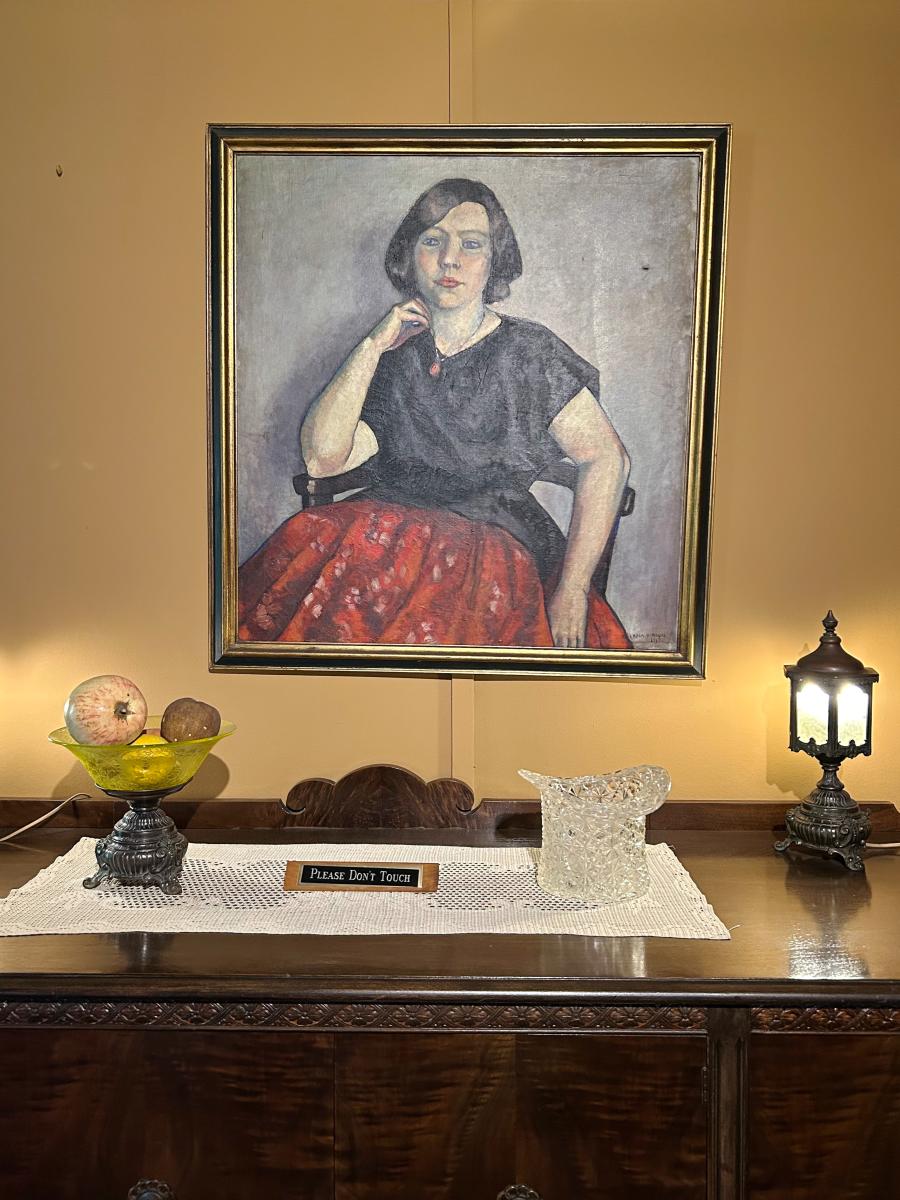
“Women have always been the home makers, but it is not usually expected of them that they should also be the home builders from the ground up,” Wilder wrote for the Ruralist, an article that also appeared in the Mansfield paper. “Nevertheless, they sometimes are and their success in this double capacity shows what women can do when they try.”
Other examples are in the early 1920s, when she wrote up a report about the local Women’s Progressive Farm Club of Wright County. Its members had visited a local farm for a meeting and picnic dinner. In October 1922, she wrote about the local Erb Fruit Company’s cold storage and vinegar plant at nearby Cedar Gap – a nearly nonexistent place today (save a Missouri Department of Conservation hiking area) was once a significant hub in that apple heyday.
“Mansfield is on the very crest of the Ozarks and the land is rough and hilly, covered with timber where it has not been cleared,” she wrote in 1914. “Although one of the most beautiful places in the world to live, with a soil repaying bountifully to the care given it, still it is no easy thing to make a farm out of a piece of rough land.”
It should also be noted that Wilder’s work follows that of another family member: Rose Wilder Lane, her daughter, who was an immensely successful journalist and writer with bylines in papers across the country. In later years, the unconventional Lane would be credited as a founder of the Libertarian party.
Some wonder how much influence and input Lane had on Wilder’s work.
“I see them as two parts of one bigger story — mother and daughter, both writers shaping how we understand the pioneer spirit,” Inman notes. “Their relationship was complicated, sure, but that’s what makes it real. Rose helped her mother find her voice, and Laura’s voice inspired generations. You can’t tell one story without the other — they each influenced the other’s journey.”
Unconventional family talent
These realities set the stage for Wilder becoming a novelist in 1932. That year, “Little House in the Big Woods” was published.
It wasn’t the first effort of Wilder to tell her story; like many of us, life seasons prompted her to want to write her own story down for posterity.
“I think that after the deaths of Mary and her mother, she (Laura) became much more conscious of her own mortality,” said Wilder biographer Pamela Smith Hill in a 2014 article in Publishers Weekly, “and probably realized that if she wanted to set down her stories, this was the time.”
The article continued: “Thinking of magazine serialization in a periodical like the Saturday Evening Post or the Ladies Home Journal, followed by publication in book form, she aimed her autobiography at the adults who had been following her newspaper and magazine columns. This was unsuccessful at the time, but it was suggested that she might reframe the story for children.”
So that’s what Wilder did. It ended up on the desk of Virginia Kirkus, the children’s editor at Harpers who was responsible for “discovering” Wilder.
“The real magic was in the telling,” Kirkus is credited with saying later of Wilder’s story. “One felt that one was listening, not reading.”
And that magic and message met the moment in a nation seeking escape.
‘When the first of the books was introduced in 1932, the United States was suffering from the Great Depression,” Janet Spaeth, a literary critic, is quoted as saying in the homestead’s application for the National Register of Historic Places. “The Midwest had experienced a lengthy drought, and city dwellers were generally no better off than the farmers.
“‘Little House in the Big Woods’ was a story of security – of a family united against outside forces. Each book built hope; despite the Ingalls family's setbacks, there was the metaphorical West, the horizon of hope. This hope sustained a nation of readers undergoing their own trials.”
While the connections were perhaps unique – given Lane and Wilder’s writing experiences – Wilder’s stories weren’t necessarily all that different from others in that era. Many people moved frequently and struggled to survive. But she had the ability and commitment and talent to put down in words.
“Another Ozarkian author appears with a book which has charmed me completely,” wrote Springfield newspaper columnist Docia Karell in 1932 of Wilder’s book debut. “A lovely thing about it is, that one of the little girls who lives in the little house in the Big Woods is also the author of the book! She is Laura Ingalls Wilder, who lives at Mansfield, Mo., now. And though this charming recital of her own childhood is her first book, she is the mother of a very famous Ozarks author, Rose Wilder Lane, whose ‘Hill-Billy’ is already by way of becoming a classic of these hills so far from Wisconsin. This gift of telling a fascinating tale seems to run in the family.”
The book found quick success and was chosen by the Junior Literary Guild, which at the time was a commercial book club for young readers.
By the following March, a Springfield newspaper article – written by famed local journalist Lucile Morris Upton – noted that “‘Little House in the Big Woods’ has brought letters from boys and girls all over the country to Mrs. Wilder’s attractive Mansfield home, expressing interest in the book.”
By the early 1950s, eight books were in the “Little House” series: “Farmer Boy” led to “Little House on the Prairie,” “On the Banks of Plum Creek,” “On the Shores of Silver Lake,” “Little Town on the Prairie,” and “These Happy Golden Years.”
Enduring impact
Wilder’s original titles – and “The First Four Years,” the final book published posthumously in 1971 – were written from the Wilders’ home near Mansfield, but not all were penned in the same dwelling. The early ones were written in a home known as the Rock House, a small cottage built by Lane for her parents in the late 1920s. It was even furnished with items from Heer’s, an iconic department store that long operated in downtown Springfield.
For several years – particularly through the Great Depression, when both the Wilders and Wilder Lane’s finances were compromised – Lane actually lived in the white farmhouse near her parents. Later, when she left, the Wilders moved back to the white farmhouse. It’s where they lived the rest of their lives.
“We were homesick for the old place,” Wilder was said to say.
That farmhouse is also where Wilder received significant attention – at least away from the Ozarks – for her work. Children across the country were reading her stories; in some places, they were known as “Laura and Mary” books because, a newspaper noted, “they concern so much of the childhood of Mrs. Wilder and her sister, Mary.”
The late 1940s were busy. Detroit, Michigan, named a new library branch in her honor. In 1947, Chicago children voted Wilder as the author they most wished would appear on a radio broadcast. She was unable to attend, the newspaper noted, but “some of the school children, in turn, broadcast wishes to her for a happy birthday.” She wrote a letter to the children, too.
Letters were indeed something central to Wilder’s connection with her readers.
“I’ve always answered all my letters,” she told a Springfield newspaper reporter in 1949. “But now I am going to have to quit that. I just can’t answer all of them.”
The article continued: “These letters come singly and in packets including those from all the boys and girls in a schoolroom. Oddly the children in the sophisticated modern world, with its conveniences and amusements, look back on that day of Mrs. Wilder’s childhood as a magic time.
“You had lots more fun than we do,” they said through the paper. “We wish we had lived in those days.”
Awards and accolades continued. In 1951, the Mansfield library was named in her honor. Three years later, the aforementioned Laura Ingalls Wilder Award was named in her honor, and she was its first recipient.
Wilder continued receiving fan mail from across the globe until her death in 1957 – just three days after her 90th birthday. Almanzo passed away years before, leaving the house vacant and in the ownership of others after the Wilders sold it to a local farmer in a life-lease arrangement.
Work quickly began to secure the home as a museum, which opened in 1959.
“It still contains the familiar furnishings, books and other treasured possessions of the writer and of her late husband, (Almanzo), about whose childhood she also wrote. Their daughter, Rose Wilder Lane, famous novelist, has made possible the establishment of the memorial.”
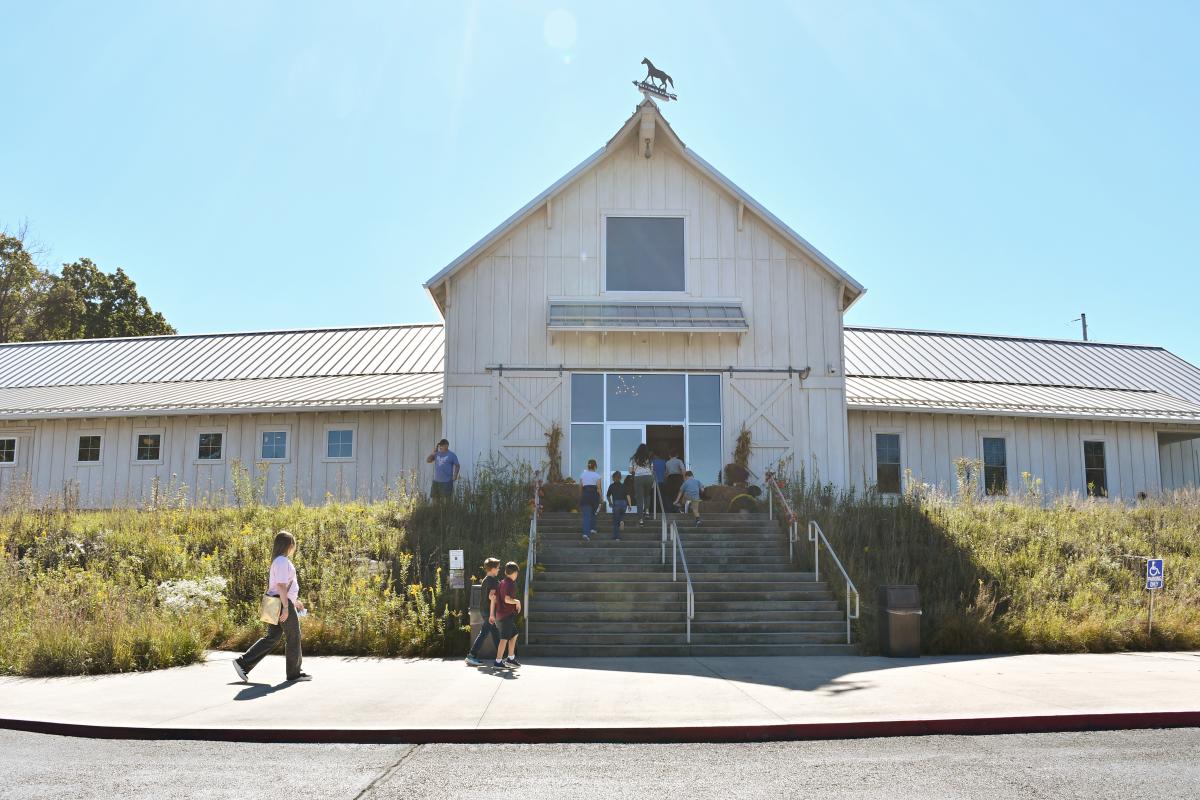
Today, the Wilders’ homes and museum are still toured by visitors from near and far every year.
“There’s something special about seeing Laura’s writing desk and the hand-crafted items Almanzo built — those pieces really make their story come alive,” Inman says. “I always tell visitors not to rush past even the smallest artifacts — their books, their photographs, even Laura’s dishes in the kitchen. Each one tells part of the story of who they were and how they lived. It’s like walking through a chapter of her life.”
More than 90 years have passed since “Little House in the Big Woods” was published, and nearly 70 since Wilder’s passing. Yet her legacy has extended in chapters that Wilder would likely find difficult to comprehend.
A major moment was in 1974 with the premiere of the “Little House on the Prairie” television show, which ran through 1983. In 1975, the annual Wilder Days fall festival began in Mansfield. In the 1990s, the Rock House was acquired and began welcoming visitors. In 2016, a new museum opened to the public.
And the messages she wrote so many years ago endure.
“Laura’s story reminds us of what endurance, faith, and family really mean,” Inman says. “She lived through hard times and still managed to see beauty and purpose in the simple things of life. In a world that moves so fast and often feels divided, her writing pulls us back to the basics—hard work, honest living, and gratitude. She showed that ordinary people can live extraordinary lives just by the way they handle life’s challenges.”
Want to visit?
Click here to connect with the Laura Ingalls Wilder Historic Home & Museum.
Things not to miss at the Laura Ingalls Wilder Historic Home & Museum:
-
Pa’s Fiddle: The very fiddle Charles “Pa” Ingalls held in his hands and used to make music is on display in the museum.
-
Items from Rose Wilder Lane: A selection of items belonging to Rose Wilder Lane – including her desk and a dress she wore in her final passport photo – are also in the museum.
-
The Wilder kitchen: Despite her pioneer upbringing, the Wilders utilized modern conveniences. Be sure to note the counters, which were made to fit Wilder’s tiny frame.
-
The bedroom’s linoleum: The uniquely patterned linoleum in the Wilders’ bedroom is original to the home.
-
Wilder’s writing space: Laura’s writing desk – where she penned letters and books – still remains. A couch in the room also served as a resting place for Laura when she needed a break.
-
The “Living Pictures” windows: Wilder called the windows in the farmhouse’s living room “living pictures” as she watched the world go by.
-
Wilder’s library: Off the living room is Wilder’s library, a quaint space with a chair and books, all in one place.
More Resources


Itineraries
Explore curated itineraries featuring attractions, dining, entertainment, and...
Visit Page