

A glimpse at another world is smack dab in Springfield at Mizumoto Japanese Stroll Garden, a real-life representation of Springfield's decades-long relationship with Isesaki, Japan. The two have been sister cities since 1986, when representatives from the cities on their respective continents visited each other, found common ground, and made the relationship official.
That connection includes a number of cultural touch points, but one of the most enduring is the Mizumoto – pronounced Miz-e-mo-tow — garden.
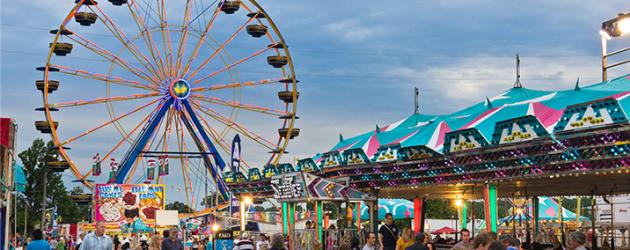
Designed to represent authentic Japanese culture, the west-Springfield landmark is open for visitors with a small admission fee from April through October. A special time to visit is during its annual Japanese Fall Festival, a weekend featuring performers, demonstrators and food vendors highlighting authentic traditions. In 2026, the festival runs September 11-13.
“I think the Mizumoto Japanese Stroll Garden is just a true gem in the city because it shares so much about culture,” says Lisa Bakerink, executive director of Springfield Sister Cities. “It definitely helps our sister city relationship with Isesaki, Japan, – have an outlet for that and a way for people to recognize that Springfield has great international connections.”
How Springfield’s connection with Isesaki began
These stories date back to the early 1980s with the creation of Springfield Sister Cities (SSC). It’s part of a larger organization called Sister Cities International, which has 1,400 chapters around the world. Of those, SSC is the only one in southwest Missouri.
“(Sister Cities International) was instituted by President Eisenhower in 1956 after World War II, as a way to create a network where communities and people can understand each other and find peace together,” Bakernik says.
The SSC nonprofit was initially supported by Springfield’s (at the time, two) Rotary clubs.
“Sister Cities was started in Springfield by civic organizations interested in promoting friendship with overseas countries,’ said Dorsey Levell of the Springfield Area Council of Churches in a 1983 Springfield Daily News article.
“The groups met with each other and talked about it,” Levell continued. “They liked the idea and so did the City Council.”
SSC didn’t waste any time in looking for family. It already had one sister city – Tours, France – when Springfield leaders learned in 1985 there was interest from Isesaki, Japan.
The city — pronounced Iss-a-sock-i and located about 75 miles from Tokyo — reached out to Springfield with interest in becoming sister cities.
“It was Isesaki’s idea to enlist Springfield as a partner in the sister city program, designed to foster world peace by sharing cultures of different cities,” noted the Springfield Leader and Press in October 1985.
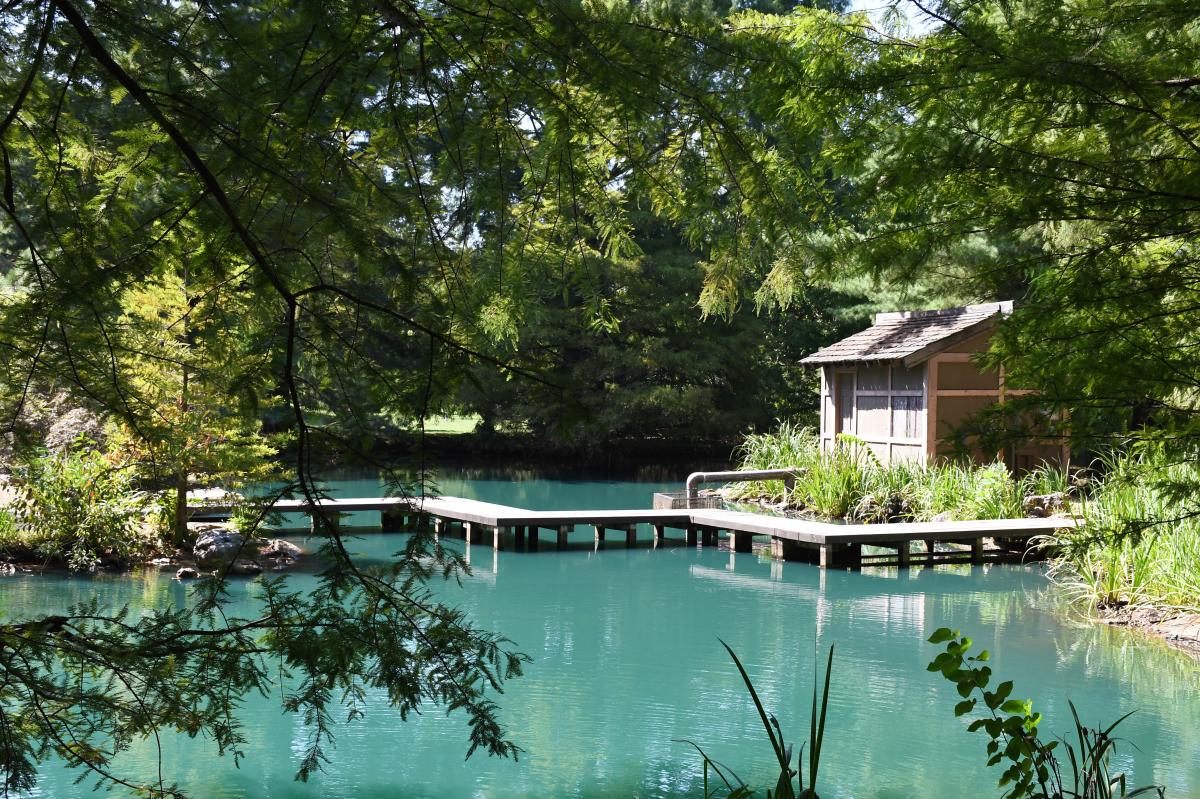
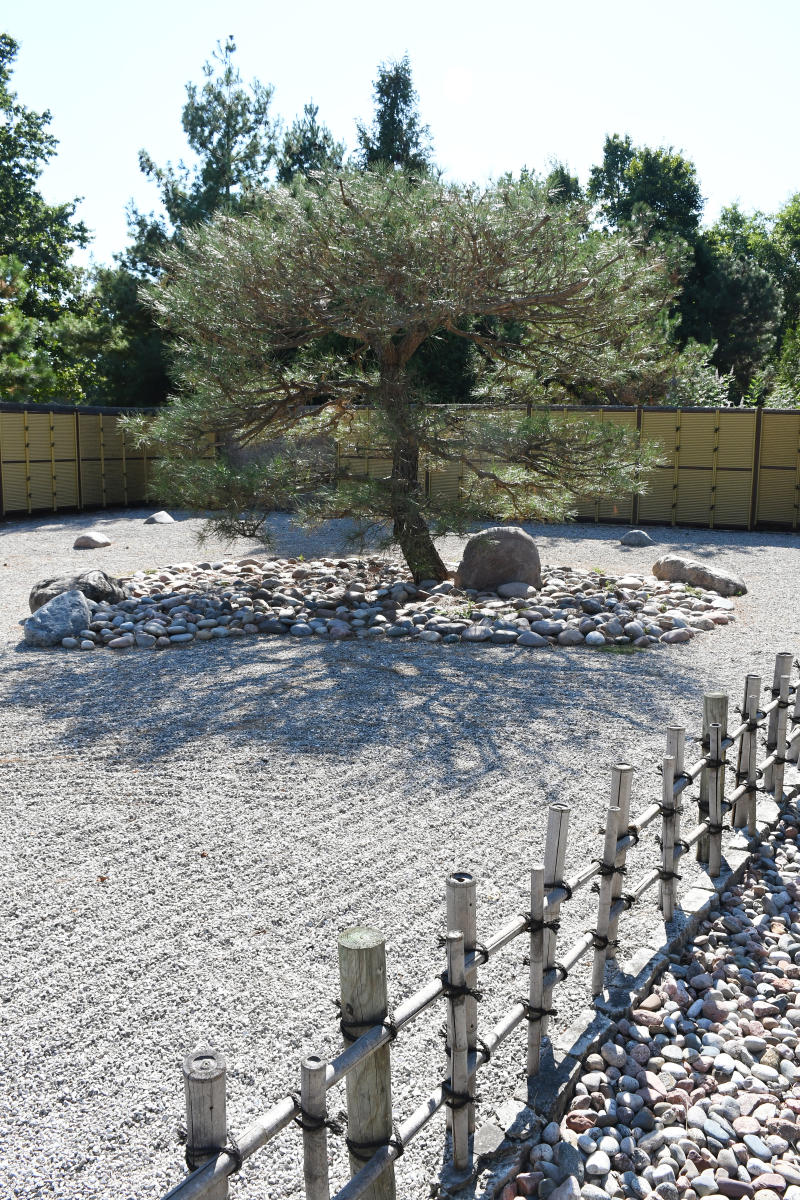
The Mizumoto Japanese Stroll Garden in Springfield offers a way to connect with culture different from the Ozarks, but tied to it. In 1986, Springfield became sister cities with Isesaki, Japan. (Courtesy of Springfield Sister Cities/Aaron J. Scott)
That was due to Ralph Williams, past leader of what was then Southwest Missouri State University’s business college and a representative of SSC. He said in the newspaper that both cities shared the same types of economies.
“Like Springfield, Isesaki is surrounded by agricultural areas with light manufacturing within the city,” the paper continued. “The Japanese city is known for its dairy, silk and air-conditioning industries.”
“The mayor of Isesaki has indicated his willingness to go ahead with the project,” Williams said in the article. “He’s interested in student and cultural exchanges and maybe some business somewhere down the line.”
Things moved fast. Representatives from Isesaki visited Springfield three times by mid-1986, learning more about the city through tours to places like Drury University, MSU, Kickapoo High School, Bass Pro Shops, housing developments, medical facilities and even the relatively new Battlefield Mall. Students also visited, spending time alongside Springfield students.
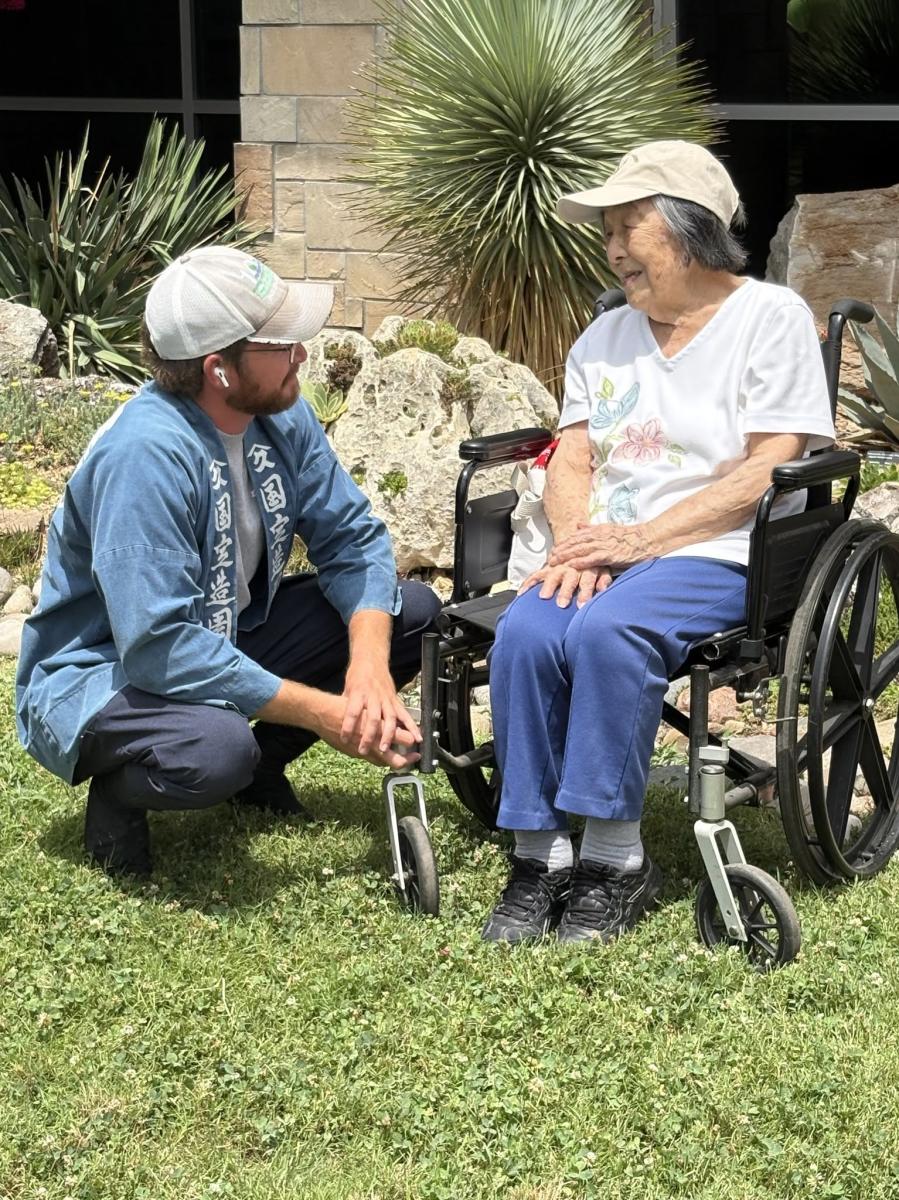
Yuriko Mizumoto Scott visited her namesake garden in July 2026. During her visit, gardeners from Japan were doing maintenance in the garden. (Courtesy of Springfield Sister Cities)
Newspapers of the day documented the play-by-play discussions of this potential relationship, which seemed to experience general goodwill – as long as the exchange stuck to culture, not commerce.
“...The original resolution dealing with Isesaki also would have encouraged the development of economic ties,” noted the Springfield Daily News in May 1986. “But local labor union leaders wanted nothing of that.” The official resolution was amended to reflect that focus on culture.
The relationship was finalized in July 1986 with then-Springfield Mayor George Scruggs’s trip to Japan.
“Present were all the 35 Isesaki council members, Scruggs and Mayor Yusaku Simojo of Isesaki, Ralph Williams, dean of the business college at Southwest Missouri State University, who had made early contacts with Isesaki about the possible relationship, and the assistant mayor of Isesaki,” noted the Springfield Leader and Press.
“‘We signed as mayors, they signed as witnesses,’ Scruggs said,” the paper continued, noting he reported the ceremony took place on July 18 in the Isesaki City Hall.
That relationship has endured. Along the way, the relationship with Tours, France, ended but another sister city linked arms with Springfield: Tlaquepaque, Mexico, which was established on June 27, 2003.
Establishing Springfield’s Japanese stroll garden
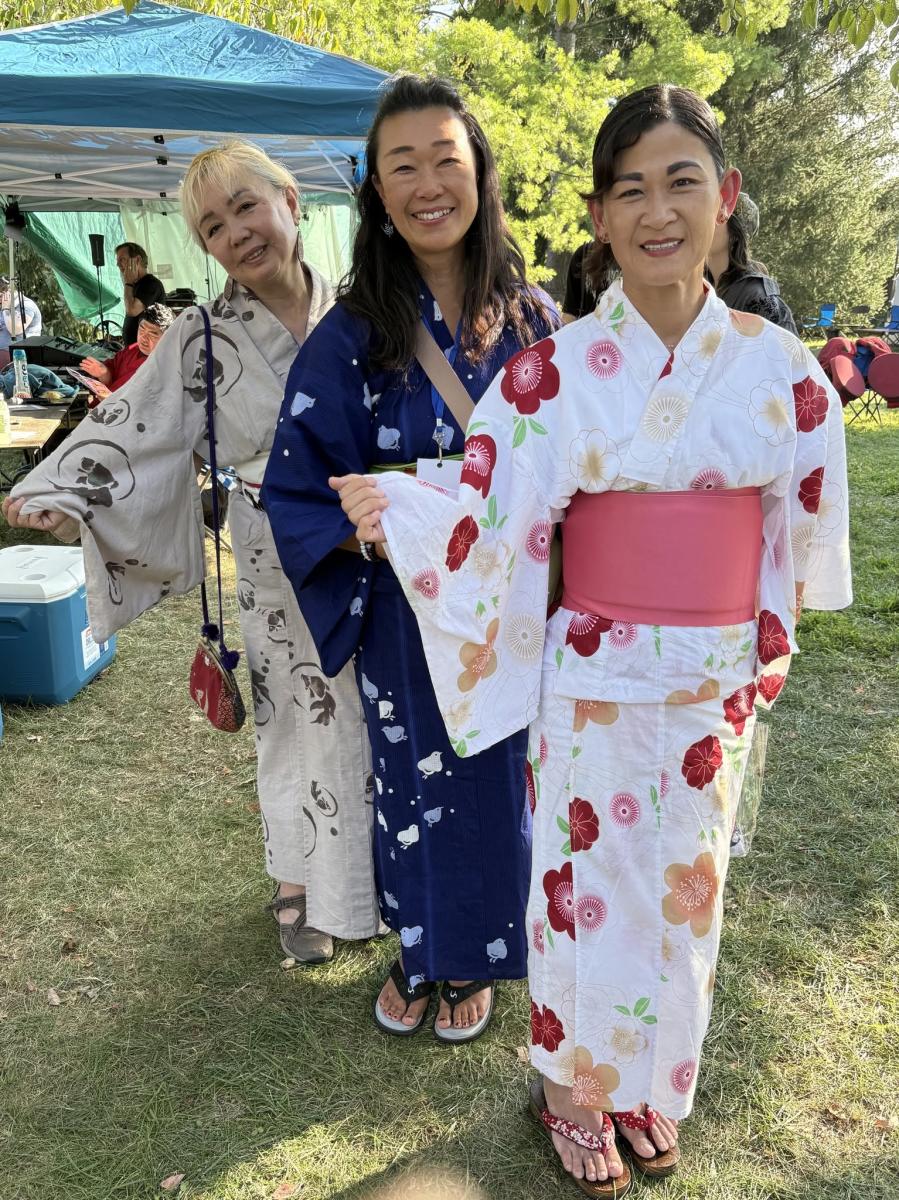
Springfield’s Japanese Fall Festival focuses on food, music and other traditions authentic to Japan.
Less than two years later after the relationship with Isesaki began, Springfield’s Japanese Stroll Garden also came to be.
Today, the garden is part of the Springfield Botanical Gardens, a 113-acre campus on Springfield’s western edge that also includes the Gray/Campbell Farmstead, the Butterfly House and the Master Gardener Demonstration Gardens. At the time, it was the first element of the center built on land that was formerly part of the United States Medical Center for Federal Prisoners.
“Japanese gardens, or any Oriental garden, are designed for mystery and tranquility,” said Bill Payne, then landscape and forestry superintendent for what was then the Springfield Parks and Recreation Department. “Probably one of the most unique features of a Japanese garden is the enticement that goes into the design. You’re never given a panorama of the entire garden, but are invited to continue strolling through.”
Officials from Isesaki evaluated concepts for the garden, Payne said, noting that they made suggestions as far as authenticity, particularly dealing with the actual layout or orientation. It officially opened in May 1988.
“Everything we have done has some authenticity to it,” Payne said in the News-Leader. “We may have adapted designs to local materials. But everything has historical ties.”
Today, the garden endures. It’s overseen by the Springfield-Greene County Park Board, but supported in part by SSC. And its adherence to authenticity is still a priority. Gardeners from Japan have visited six times since its start to help train local staff.
Another key person to note is Yuriko Mizumoto Scott, a native of Japan who moved to the Ozarks as a war bride in 1951. Her service to the garden led to its being renamed in her honor in 2004.
“She's 95 now. She visited the garden in July, when the Isesaki gardeners came to do some work out here and to teach our staff, our gardeners here, how to prune in the authentic Japanese way,” Bakerink says, noting they did considerable work in its meditation garden. She also says that gardeners in Japan are revered, receiving recognition in a way that doctors and lawyers do in the United States.
“They come and just help us try to make things more authentic, and then train our staff to do things the authentic way,” she adds.
Winding walking paths direct visitors to a variety of features that encourage thoughtfulness, understanding and appreciation. A few examples include:
Its Zig-Zag Bridge, designed to help folks slow down and “help create a meditative state,” as a brochure puts it.
-
Stepping stones – for those who choose to cross them – prompt passersby to slow down. “This act of slowing down allows for a greater opportunity for contemplation,” the brochure notes.
-
A curved Moon Bridge, which reflects the roundness of the rising moon, an important part of Japanese culture.
-
An Azumaya, a Japanese gazebo and water wheel, which is made entirely from wood with traditional hand tools.
-
The intentionally simplistic Tea House, built for traditional tea ceremonies, reflects harmony, respect, purity and tranquility.
During the 2026 festival, additional activities include traditional music, demonstrations and food — and delegates from Isesaki are among them.
“People can interact with them, and they'll share a craft or share something that is a specialty of theirs to be able to interact with people here at the festival,” Bakerink says.
The Role of Springfield Sister Cities
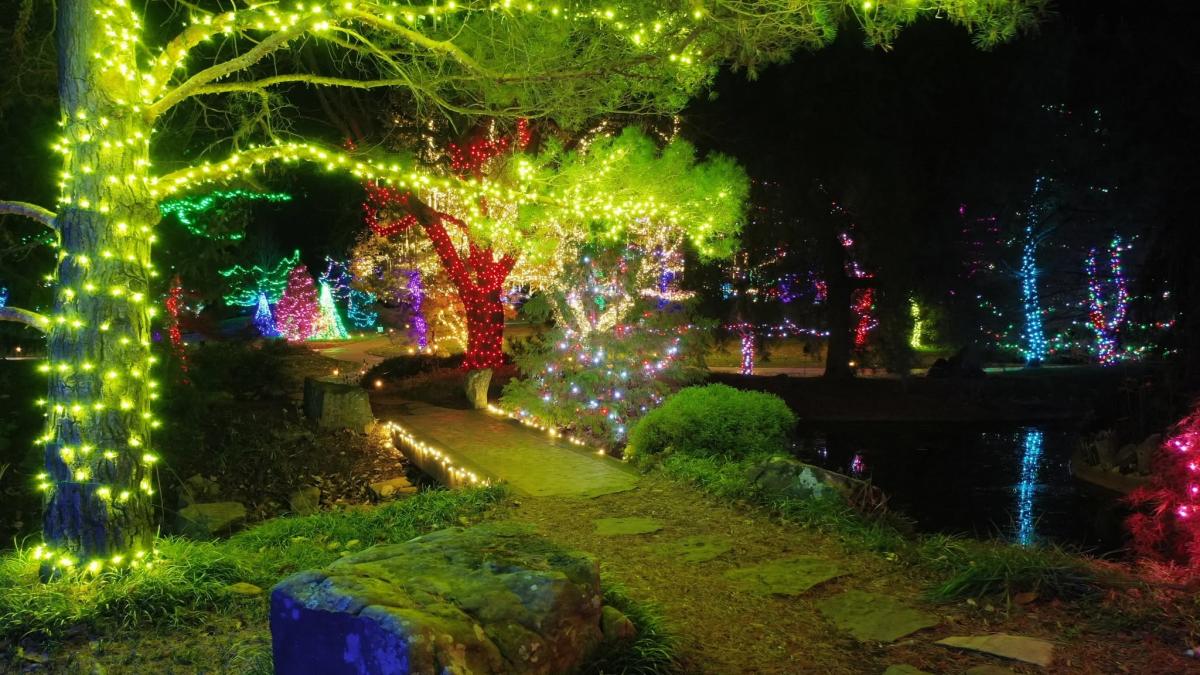
Gardens Aglow, another annual festival at the Mizumoto Japanese Stroll Garden, captures holiday magic without superimposing Western tradition — like Santa Claus. (Courtesy of Springfield Sister Cities)
At the root of it all is SSC, the nonprofit that works to build connections between cultures, whether it’s through the garden, events or trips that bring people together.
“Our particular chapter is very active,” Bakerink says, noting they host several events each year. In addition to the Japanese Fall Festival, the list includes Gigs in the Garden, ¡Viva! Tlaquepaque, Gardens Aglow, the Cherry Blossom Kite & Piñata Festival and Isesaki Student Art Exhibit. There are also trips from Springfield to its sister cities in Japan and Mexico.
“The people on those trips are basically cultural ambassadors from Springfield,” she says, noting that 2026’s trip to Japan is particularly notable and more “official” given the 40th anniversary. In addition to city and local leaders, the musical ambassador they will bring adds a third culture to the mix: They are coordinating a visit by Grupo Canela from Tlaquepaque to Isesaki.
“Bringing all these cultures together for the 40th is going to be a really cool event,” Bakerink says.
But cultural connections are available at home, regardless of if they ever participate in a trip.
“The main thing is that relationship,” she says. “With 40 and 23 years, I really believe that (cultural exchange) this is woven into the fabric of who Springfield is. Not everybody knows about sister cities or takes advantage of the opportunity to meet people from our sister cities, but they can.”
Want to learn more?
Click here to connect with Springfield Sister Cities. You can learn more about the Mizumoto Japanese Stroll Garden here, and upcoming Japanese Fall Festival here.